
Product tour
See the whole program without booking anything.
Six screens, in the order a patient moves through them — from the first-visit baseline to the record your billing team uses. No login, no form.
Before clinic
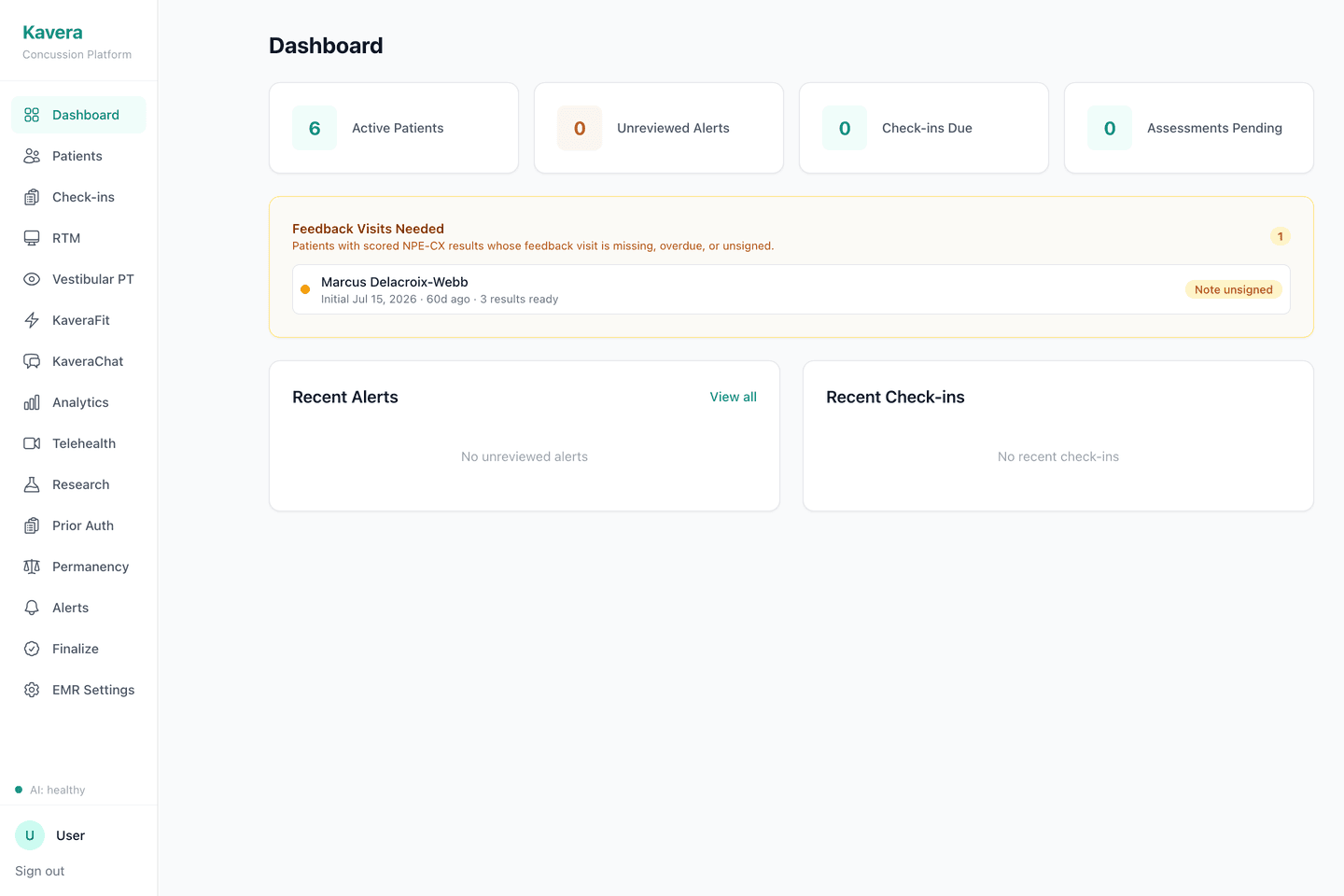
The morning queue
Who needs attention today, in one view: unreviewed alerts, check-ins due, assessments pending, and the patients whose feedback visit is overdue. This is the screen a clinician opens before the first appointment.
The record
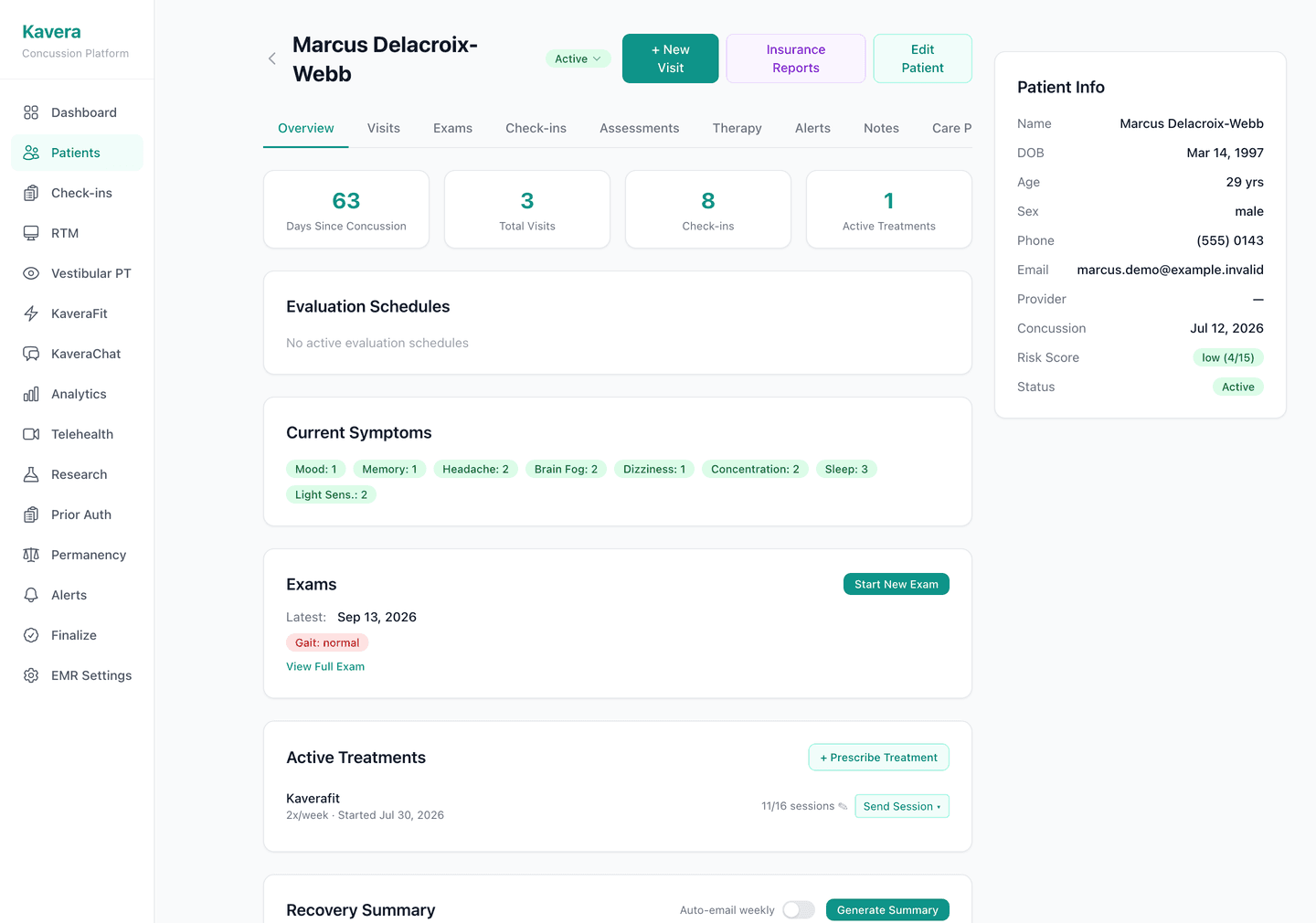
One patient, one chart
Days since injury, visits, check-ins and active treatments at the top. Current symptoms, exams, and the brain-training course underneath — including how many sessions of the prescribed course have actually been completed.
Baseline, then re-measured
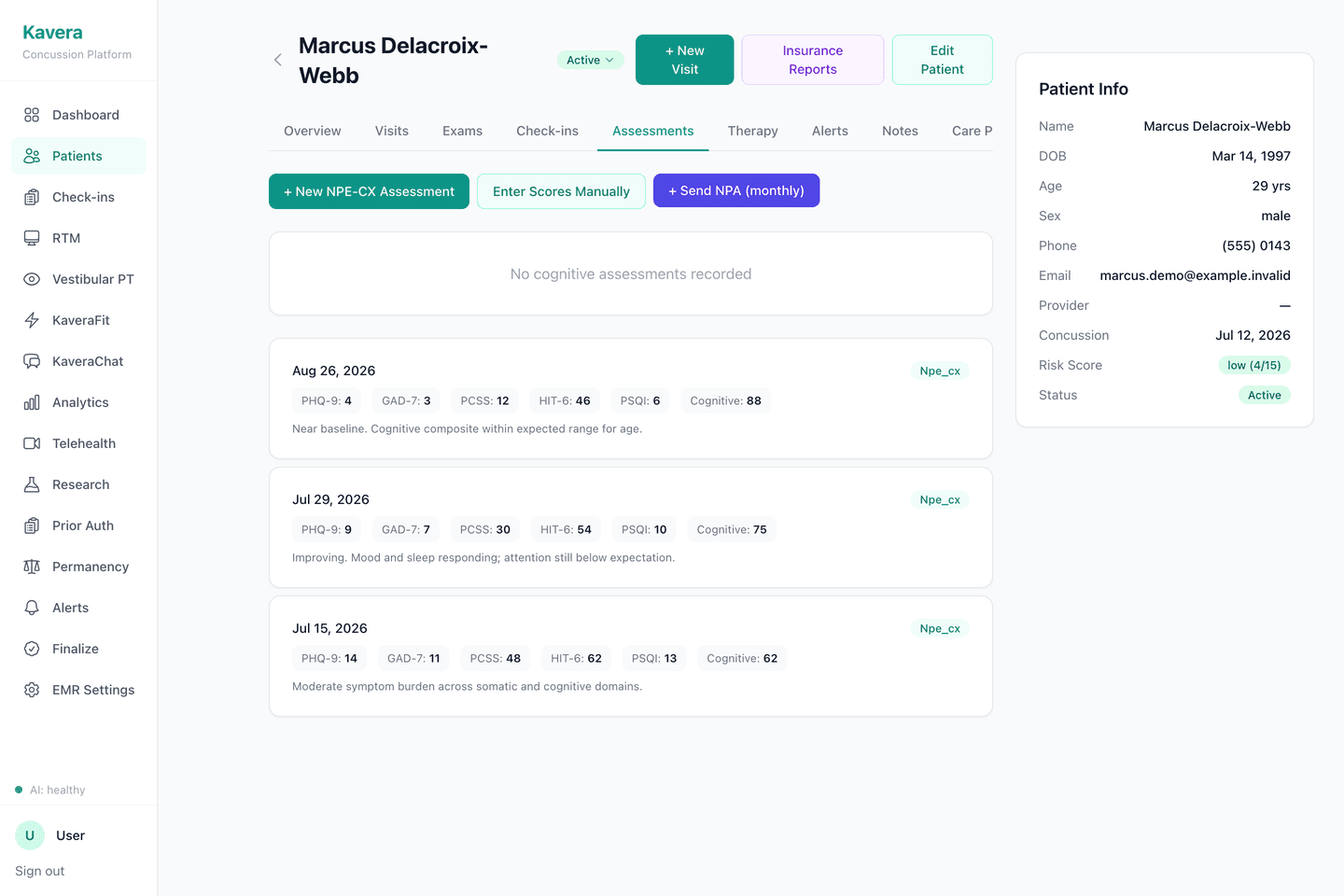
The neuropsych battery
PHQ-9, GAD-7, PCSS, HIT-6, PSQI and a cognitive composite, administered at the first visit and repeated against that baseline. Each battery carries a written interpretation, so the trend is readable at a glance rather than reconstructed.
Weekly check-ins
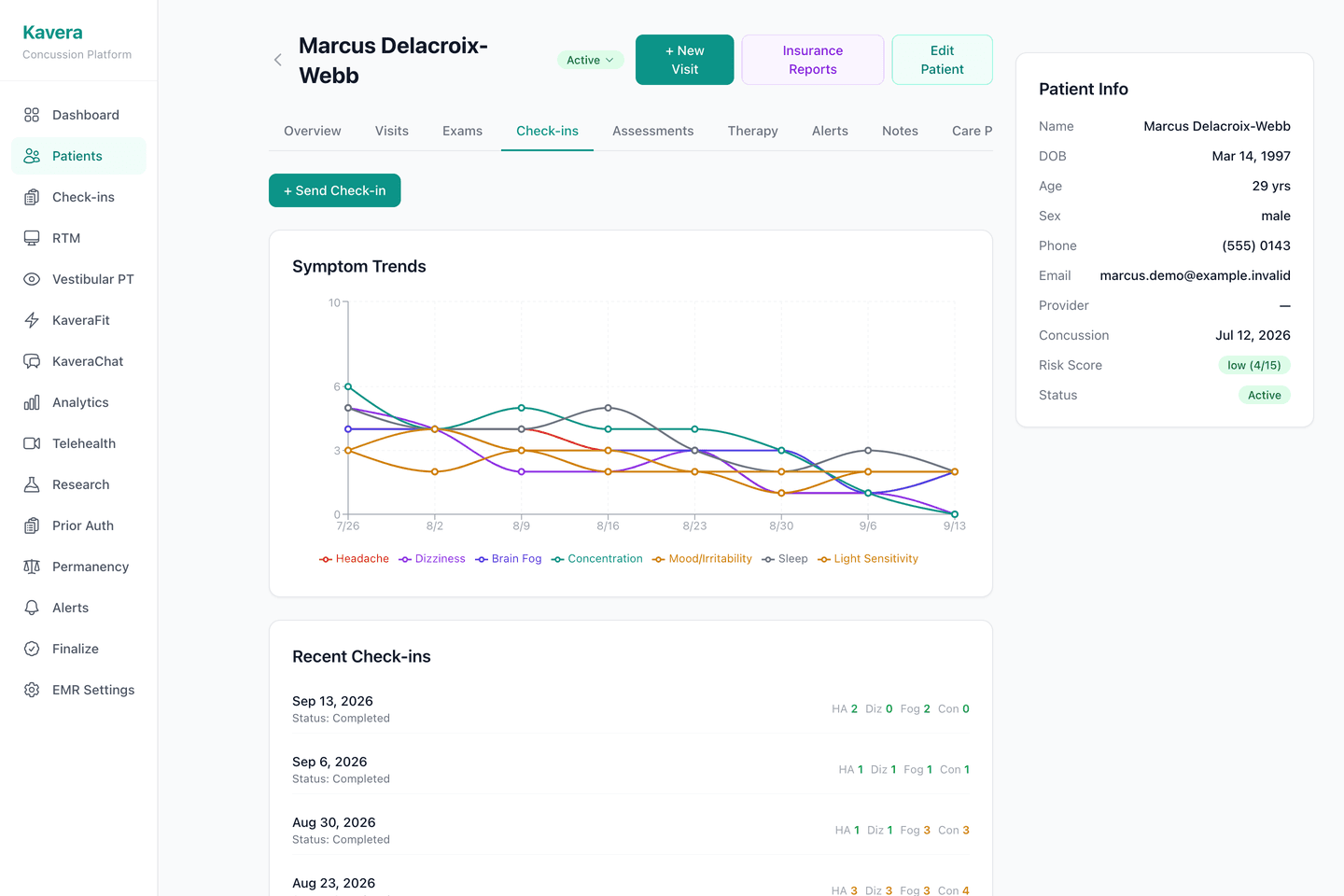
What happens between visits
Short, validated check-ins go out on the cadence you set. Symptoms, sleep, mood and cognition are plotted week over week, so the recovery curve is visible before the patient is back in the room.
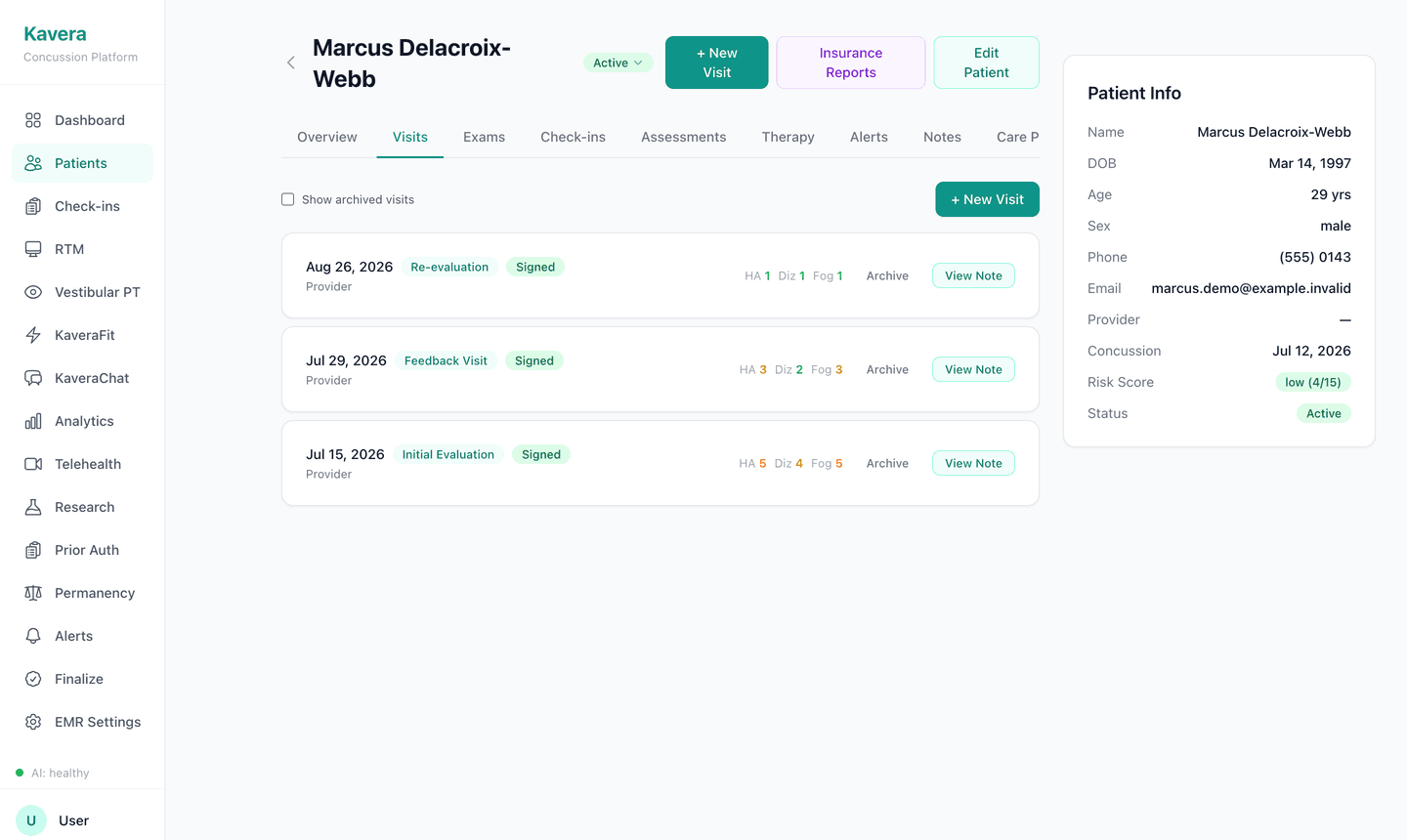
Initial · feedback · re-evaluation
The visit, documented
First visit, two-week feedback visit, monthly re-evaluation — each with its symptom scores and a signed note. The note is generated from what was actually recorded, then reviewed and signed by you.
Documentation
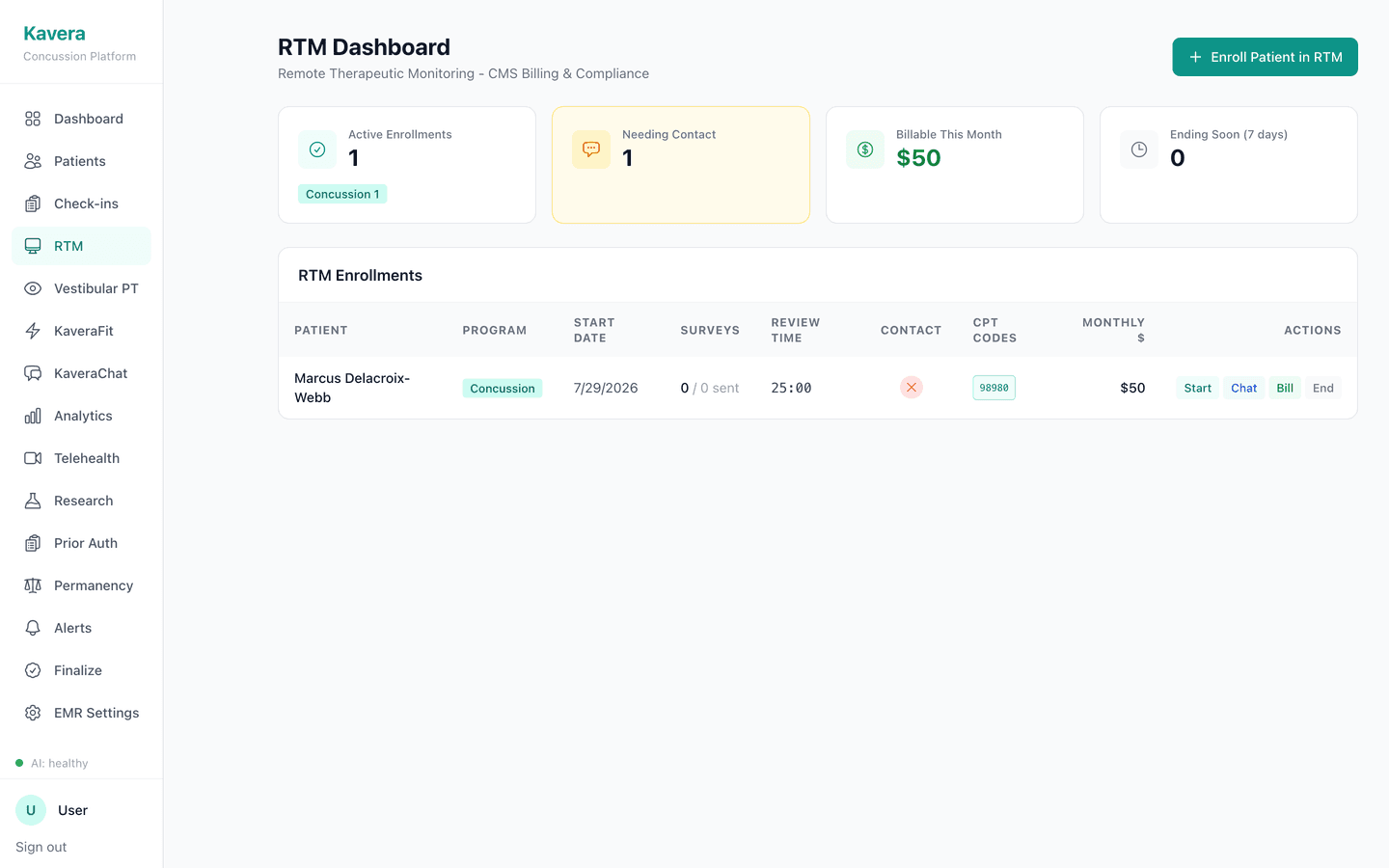
The billing record
Monitoring minutes, interactive contact and the codes they support, accrued as the work happens rather than reconstructed at month end. Educational, not coding advice — verify with CMS, your MAC and each payer.
Want it on your own patients?
One field. 30 minutes. Live demo with a clinician.